Australasian Plant Pathology Society


| Previous Seminars | |||
|
|
|||
| Date Tuesday 13th October 2026 Hosted by Sue Pederick (South Australian Regional Councillor & APPS Region Council Coordinator) APPS Sue.pederick@sa.gov.au | |||
 |
Dr Kiflu Tesfamicael
Title: National surveillance system for Karnal bunt. Abstract: Kiflu is a molecular scientist with over seven years of hands-on experience in wet-lab work, molecular diagnostics, genomics, and bioinformatics. He completed his Master of Plant Biotechnology in 2016 and his PhD in Biomedical Science in 2025, both at the University of Adelaide. Kiflu is currently a Research Officer for New Molecular Diagnostic Applications within the Molecular Diagnostics Centre at SARDI. He is involved in several nationally significant projects, including the Developing National Surveillance System for Karnal Bunt and Effective Virus Management in Grain Crops. His research interests span molecular diagnostics, genomics, next-generation sequencing, and bioinformatics, with applications in both agricultural and biomedical sciences. |
||
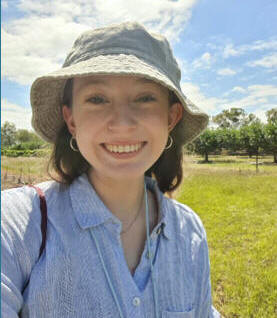 |
Montana Hickey Title: Plant Pathogens, Biosecurity and International Collaboration: Lessons from Laos PDR Abstract: Montana Hickey is a plant pathologist with the Australian Government Department of Agriculture, Fisheries and Forestry in Sydney, specialising in disease diagnostics to support Australia’s national biosecurity system. In 2025, with support from the Crawford Fund and alongside Professor Lester Burgess, Montana travelled to Laos PDR to undertake a survey of foliar diseases affecting a range of horticultural and ornamental plants. This project aims to support the Lao Government in developing a comprehensive plant disease checklist to facilitate international trade, particularly with the European Union. This presentation will share key findings from the survey, explore the practicalities, benefits and challenges of undertaking plant pathology work in developing countries, and reflect on lessons learned through the project. It will also place the work in the broader context of more than 12 years of ongoing project activity, led by Lester Burgess and involving the contributions of over 70 volunteers. |
||
|
Date Tuesday 8th September 2026 Hosted by Fiona Filardo (Queensland
Regional Councillor) APPS |
|||
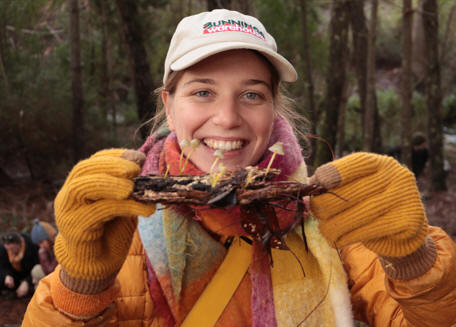 |
Ms Eloise Martin Title: Key pathology issues in Australian baby leaf production Abstract: In this presentation we discuss pathology activities undertaken within the AHR project “Addressing key challenges in Australian baby leaf production”. The project is investigating and addressing issues across the supply chain, including shelf life, leaf quality, agronomy, weeds, pests and diseases. The pathology component includes frequent surveillance in Victoria and Queensland, to identify the most prevalent diseases in each production region and season. These findings inform the next phase of the project, where field and glasshouse testing will be undertaken to identify management options. Current focuses emerging from surveillance include damping off (a pathogen complex), Sclerotinia and spinach white spot (a disorder/disease with unknown aetiology). Isolates are also being categorised with pathogenicity testing and genetic sequencing. We are also scouting for downy mildew races using a panel of cultivars with known race susceptibility, to indicate presence in the regions (QLD and Vic). Grower collaboration and reporting is a central focus of the project. |
||
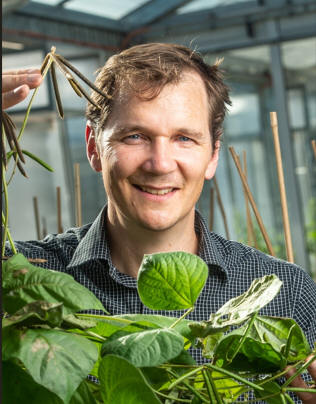 |
Dr Paul Melloy Title: Using Remote Sensing to Support Mechanistic Epidemiological Models and Within-Field Hotspot Detection. Abstract: Remote sensing research in plant pathology has focused overwhelmingly on disease detection. Yet there are simpler, underexplored ways to use this technology, particularly by combining it with epidemiological models. Process-based models let researchers simulate plausible disease scenarios where empirical data are limited, but on their own they typically treat a field as a single, uniform unit. We present a proof-of-concept framework with cercospora leaf spot (CLS) in sugar beet. We linked remotely sensed leaf area index (LAI) to the Wolf and Verreet (2005) negative-prognosis model. LAI-derived canopy closure dates were used to initialise the model separately for each pixel across a field. This revealed substantial within-field variation in predicted epidemic onset. Zones with denser canopies were flagged consistently earlier than the conventional field-average forecast and successfully predicted onset preceding ground-truthed onset in 74 - 100% of cases across three remote sensing platforms. Our proof-of-concept shows how remote sensing can enhance existing, interpretable epidemiological models rather than replace them, delivering spatially explicit risk information to support more targeted scouting and fungicide timing. |
||
|
Date Tuesday 11th
August 2026 Hosted by Mark Angelo Balendres (Tasmanian Regional Councillor)
APPS |
|||
 |
Dr Jonathan Amponsah Title: Determination of key drivers of powdery scab incidence, prevalence, and severity in potato fields. Abstract: Powdery scab remains a major challenge to profitable and sustainable potato production in Tasmania and many potato-growing regions worldwide. Disease management has generally been ineffective due to the lack of tools that enable control measures to be targeted at the most vulnerable stages of disease development. This project aimed to identify the key factors driving powdery scab incidence and severity under commercial field conditions and to provide a robust scientific basis for developing a decision support system that can guide treatment timing and improve disease risk management. The findings showed that disease risk is strongly influenced by pathogen complexes. Soil properties and soil microclimatic conditions were also major determinants of disease incidence and severity, with their effects varying according to crop growth stage. Early-season powdery scab risk was strongly associated with the presence of plant-parasitic nematodes, particularly Pratylenchus crenatus, P. penetrans, and Meloidogyne fallax. In contrast, Pratylenchus neglectus was associated with reduced disease severity, suggesting potentially suppressive interactions within soil biological communities. Overall, this project provides a comprehensive understanding of the factors driving powdery scab and pink rot and supports the development of proactive, targeted, and sustainable disease management strategies. Adoption of these outcomes has the potential to reduce economic losses, improve tuber quality, and enhance the resilience of commercial potato production systems. |
||
 |
Prof. Katherine (Kathy) Evans Title : Research to practice via producer-led trials: crop protection case studies .Abstract: Wine-grape producers experiment to help solve problems and adapt viticultural practices for profitability and sustainability. Our aim was to implement, adapt and evaluate participatory processes and in-vineyard methods during producer-led trials to understand key features for success. Thirteen wine businesses conducted 23 modified strip trials over two seasons in Tasmania. Participants were guided, observed and interviewed as they developed and implemented one or more trials to test various cultural, chemical and biological control tactics for the management of botrytis bunch rot and powdery mildew. We found that a structured, adaptive and supported approach helped producers to complete trials effectively and efficiently. Key features for success include a simple trial design producing robust results with minimal data collection; timely access to suitable technical experts and facilitators; professionals offering guidance without dominating the process; and facilitated workshops to maximise learning, reflection and planning for next trials. This scalable methodology is compatible with how farmers experiment in practice and motivates producer ownership in the process and outcomes. |
||
|
Date Tuesday 9th June
2026 Hosted by Kylie Chambers (Western
Australia Regional Councillor)
APPS |
|||
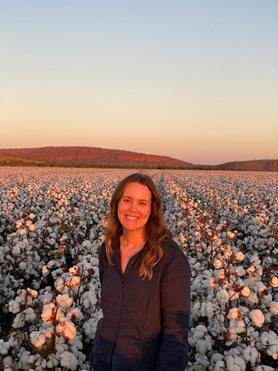 |
Sarah Nolan Title: Plant pathology in remote northern Australia Abstract: Department of Primary Industries and Regional Development scientist Sarah Nolan-Gorman is a field plant pathologist based in Kununurra, on Mirriwoong Gajerrong Country in the far north-east of Western Australia. This region is home to the Ord River Irrigation Area, a unique tropical irrigated farming region with an interesting history and emerging industries, including cotton. Sarah is currently involved in establishing local disease diagnostic capability for Western Australian cotton growers through the Australian Cotton Disease Collaboration. This presentation will explore the realities of working in plant pathology in remote northern Australia, including the rewards, challenges, and opportunities that come with supporting agriculture at the edge of Australia’s production systems. |
||
 |
Dr. Viet-Cuong Han Title: Linking soil and air microbiomes: implications for disease suppression and pathogen exposure Abstract: Dr Han is a plant pathologist and microbiome scientist based at Curtin University. Soil and atmospheric microbial communities are often studied separately, yet they can form interconnected systems that may influence plant health across multiple scales. In this seminar, I will present recent work exploring how soil and airborne microbial communities contribute to plant disease suppression and pathogen exposure. Using disease-suppressive and conducive soils, I will first show how soil microbiomes actively regulate disease outcomes, functioning as dynamic reservoirs of both antagonistic microbes and latent pathogens, based on recent work on suppression of Sclerotinia sclerotiorum. I will then present analyses of soil fungal communities across different land-use contexts, revealing the widespread presence of cryptic plant pathogens in soils. Building on this, I will introduce recent aeromicrobiome work using a novel vehicle-mounted eDNA sampling platform, enabling landscape-scale monitoring of airborne microbial communities. This approach revealed a range of pathogens and fungicide resistance-associated mutations in airborne populations. Together, these studies suggest that microbial communities in soil and air are linked through processes of persistence and dispersal, with implications for plant disease dynamics, biosecurity, and microbial exposure across agricultural landscapes. |
||
| Watch the replay | |||
|
|
|||
| Date Tuesday 12th May 2026 Hosted by Dr Joel Vanneste (New Zealand North Regional Councillor) APPS Joel.Vanneste@plantandfood.co.nz | |||
 |
Dr Damola Adejoro
|
||
 |
Assoc. Prof. Monica Gerth
|
||
| Watch the replay | |||
|
|
|||
| Date Tuesday 14th April 2026 Hosted by Shreya Patel (NT Regional Councillor) APPS shreya.patel@nt.gov.au | |||
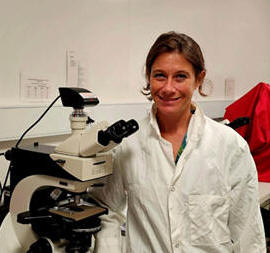 |
Dr Melanie Ford
|
||
 |
Dr Sonu Yadav |
||
| Watch the replay | |||
|
|
|||
| Date Tuesday 10th March 2026 Hosted by Dr Mohamed Zakeel Cassim (ACT Regional Councillor) APPS Mohamedzakeel.Mohamedcassim@csiro.au | |||
 |
Dr
Louise Thatcher PhD Abstract: Dr Louise Thatcher is a microbiologist and molecular plant pathologist based in Canberra. She has dedicated her research career to crop protection, from genetic improvement of crops through to biocontrol, and from fungal pathogens to insect pests. She currently leads a biopesticides for crop protection science area in CSIRO Agriculture & Food. Her research on the discovery, improvement and deployment of beneficial microbes and their natural products aims to maintain or improve crop productivity under a resource-limited future, mitigate the impacts of resistance development in traditional crop protection controls, and safeguard agriculture in the face of emerging biosecurity threats. In this presentation, Louise will provide an overview of her biopesticide research and highlight how the CSIRO team apply multi-omics technologies through to scale-up and in-field validation to unlock the potential of Actinobacteria for crop protection in current and future farming systems. |
||
 |
Dr Manish
Patel PhD |
||
| Watch the replay | |||